
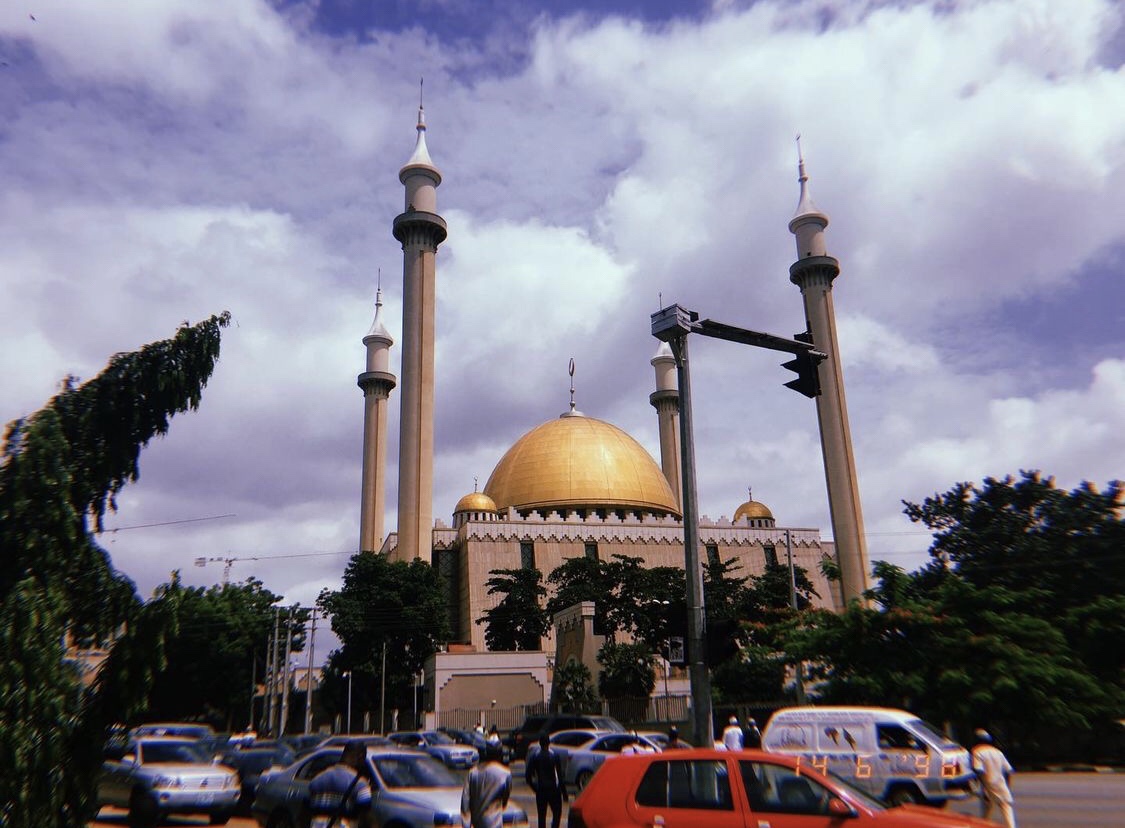
The National Mosque, photographed by Mahmud Nasir Jafar
If you have read any of Dan Brown’s books, you’ll notice how important places are to his stories. And if, like me, you have read all of his books, you must have been fascinated by the richness in which places were described and the deliberateness in which they were made key elements to the stories. It is the closest thing you will ever feel to being in these places. I think, in my opinion, it is arguably better than seeing these places in pictures because, ironic as it may sound, the pictures don’t show you the full picture the way his words do.
It is said that books transport you to their setting when you’re nose deep into reading them but the feeling of reading a Dan Brown book is not comparable to any feeling I have felt while reading any fiction or nonfiction before. He leaves no stone unturned; he describes the most minute detail of the environment. I can still almost see The Hagia Sophia in my mind. He made me fall in love with the streets of Paris, the nooks and crannies of Seville, the shady underground’s of the Vatican City, and the labyrinthine passageways in Barcelona. Even when the details don’t add much to the story, you find yourself fascinated by its vividness while still not losing track of where the story is headed. It is a mark of a true descriptive storyteller, to be able to keep you interested with so much to be distracted by. It makes the stories more real.
It is why, having being exposed to such genius, I feel saddened by the lack of representation that Abuja has in literature. Not in prose and not in poetry. There’s no piece of literature that I can point to and proudly say, yes, that is my city. Abuja may not have the historical clout that places like Rome or Paris have, but it definitely has its own story to tell.
I want to be taken on a wild ride through Abuja’s highways; solve a murder case in an overpriced restaurant in Wuse 2; burst a money-laundering operation in a Furniture house in Gwarinpa; a grass to grace story from Mararraba to Aso Rock; an unlikely alliance between a bolt driver and a sex worker who have to save the day; midnight clubbing gone south; Zombie attacks with Gwarinpa’s gated walls providing a haven; a hidden vault under the National Mosque that hides the city’s secrets. I want to read all this with descriptions of how bland the tea tastes and how dark the streets are in the dark. Tell me about the faulty gate on B Close, the potholes on 69 Road and the drunk police officers at Banex junction. I want to be able to relate. I want to be able to say yes, I know what you mean or how that feels.
And don’t get me wrong, I’m not saying Abuja is completely nonexistent in Nigerian literature. It’s just that even when it is, the descriptions usually add nothing to the story and completely lack soul. Glorified, unrealistic and bland.
I’m not asking for a Brown-level genius, but please, Nigerian writers, give us something to work with. Put our city on the map.
 Much A-Think About Nothing